
Books I Didn't Read. Letters I Didn't Send.
18 June 2026 - 16 July 2026
“Unsent letters carry a kind of cruelty. A letter is written as a space shared by two people; by not sending it, its writer claims the power to include and exclude the recipient simultaneously. Out of cowardice or control, an act is performed in the name of caring or discretion. Unsent letters should never be written. But what difference is there between an unsent and an unwritten letter?” asks Yiyun Li in a book the artist did not read.
Li discusses activated contempt blocking transmission; the denial of self-exposure as punishment by withholding letters. The exhibition starts where the letter stays unwritten. Rather than refusal, Jascha Froh describes a blocked initiation of action and perceptual failures.
Books and letters are both forms of transmission. Connecting interior worlds across distance and time, they carry something from the self to another. The exhibition explores the ambivalence of this movement's recognized, still inactive refusal. Froh portrays the condition where the subject no longer seeks communication. What emerges is a mode of being with oneself in its sealed interiority.
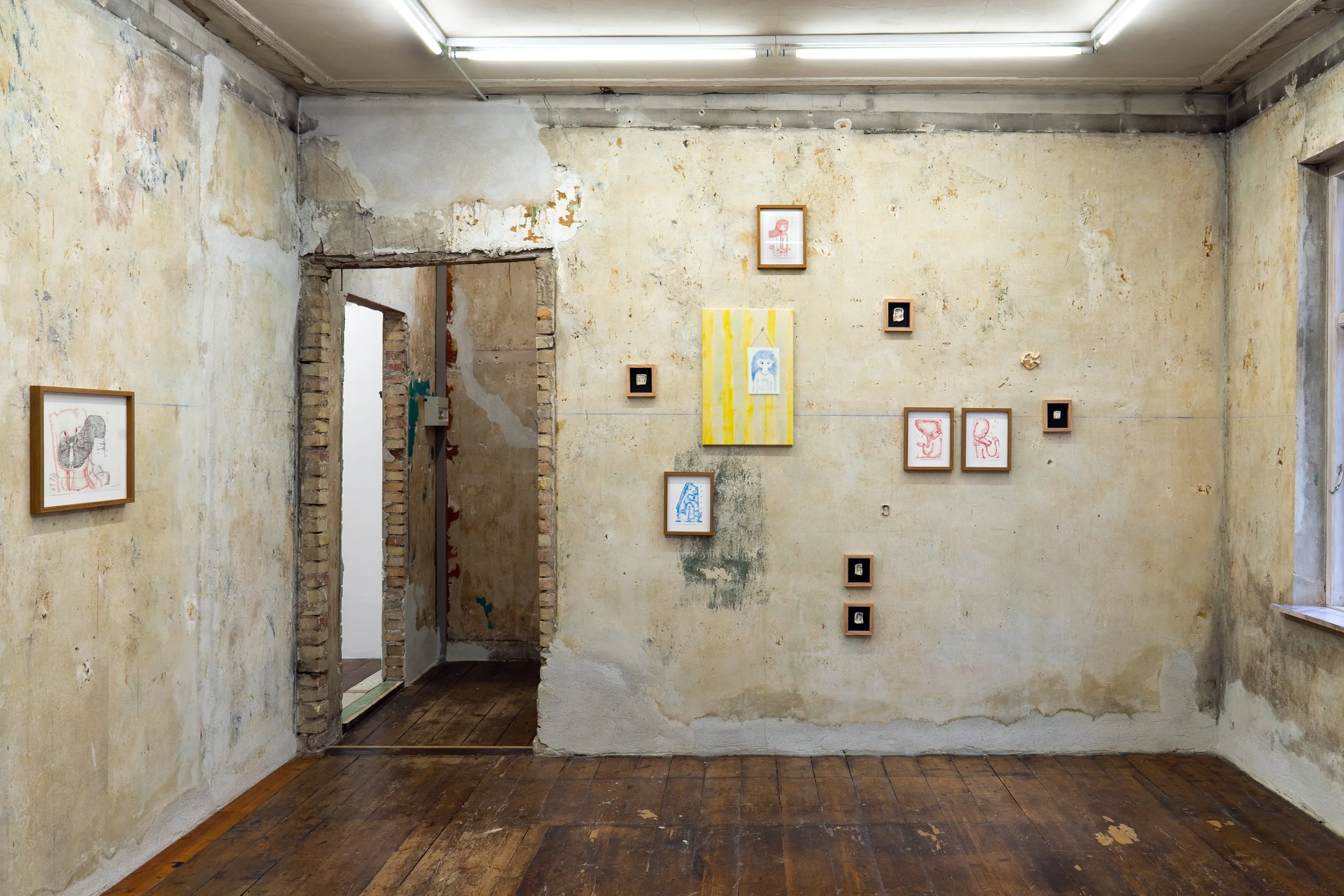
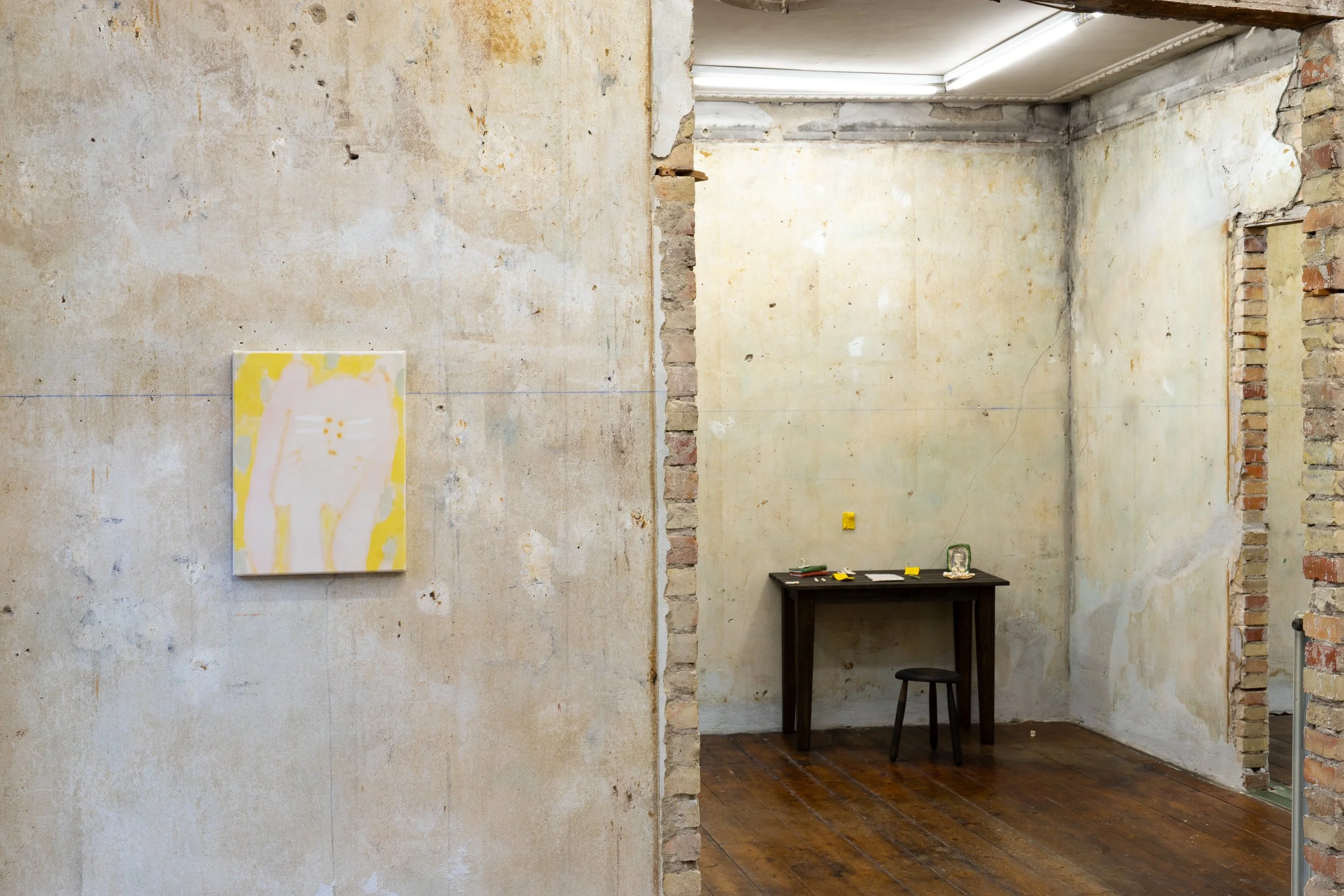
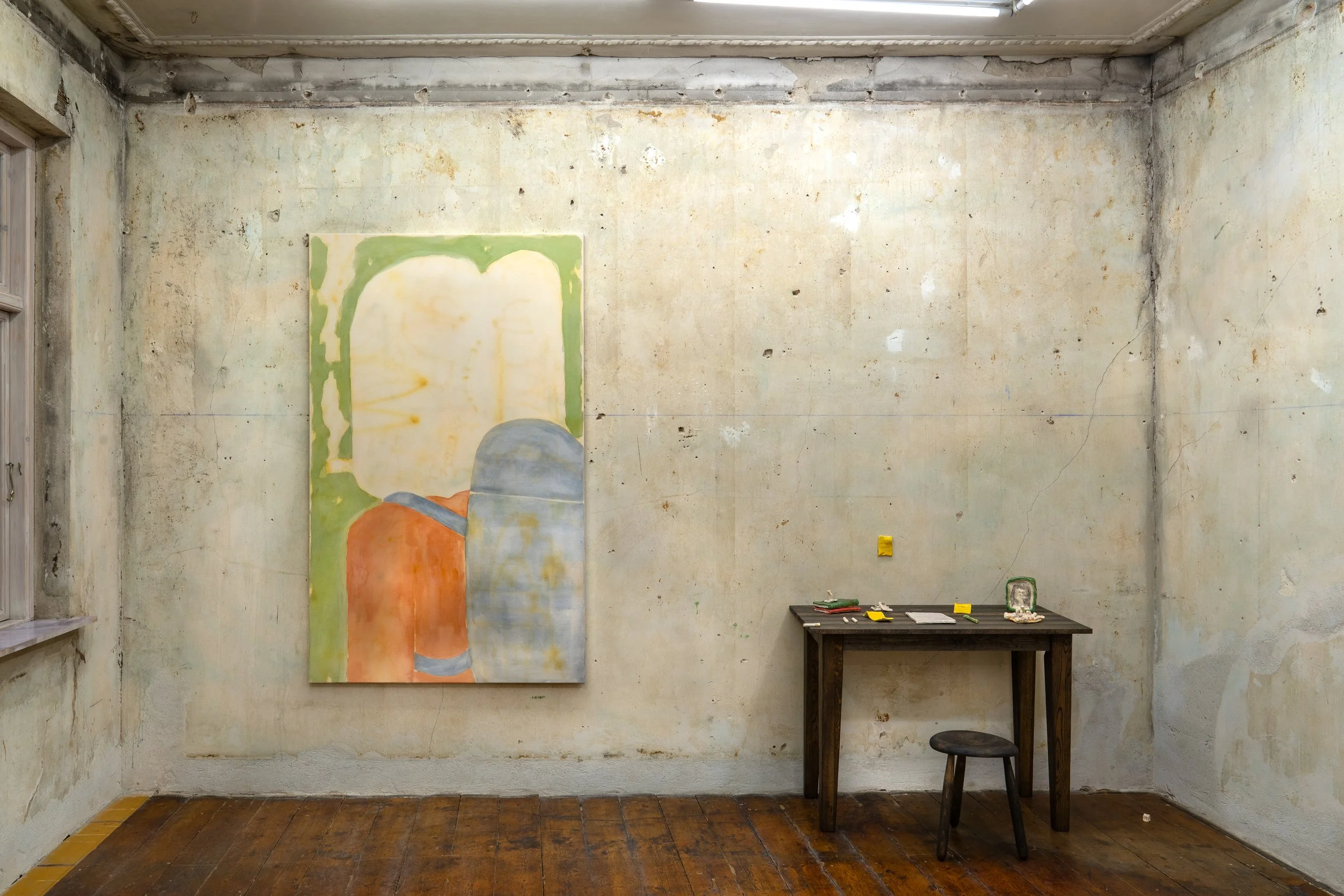
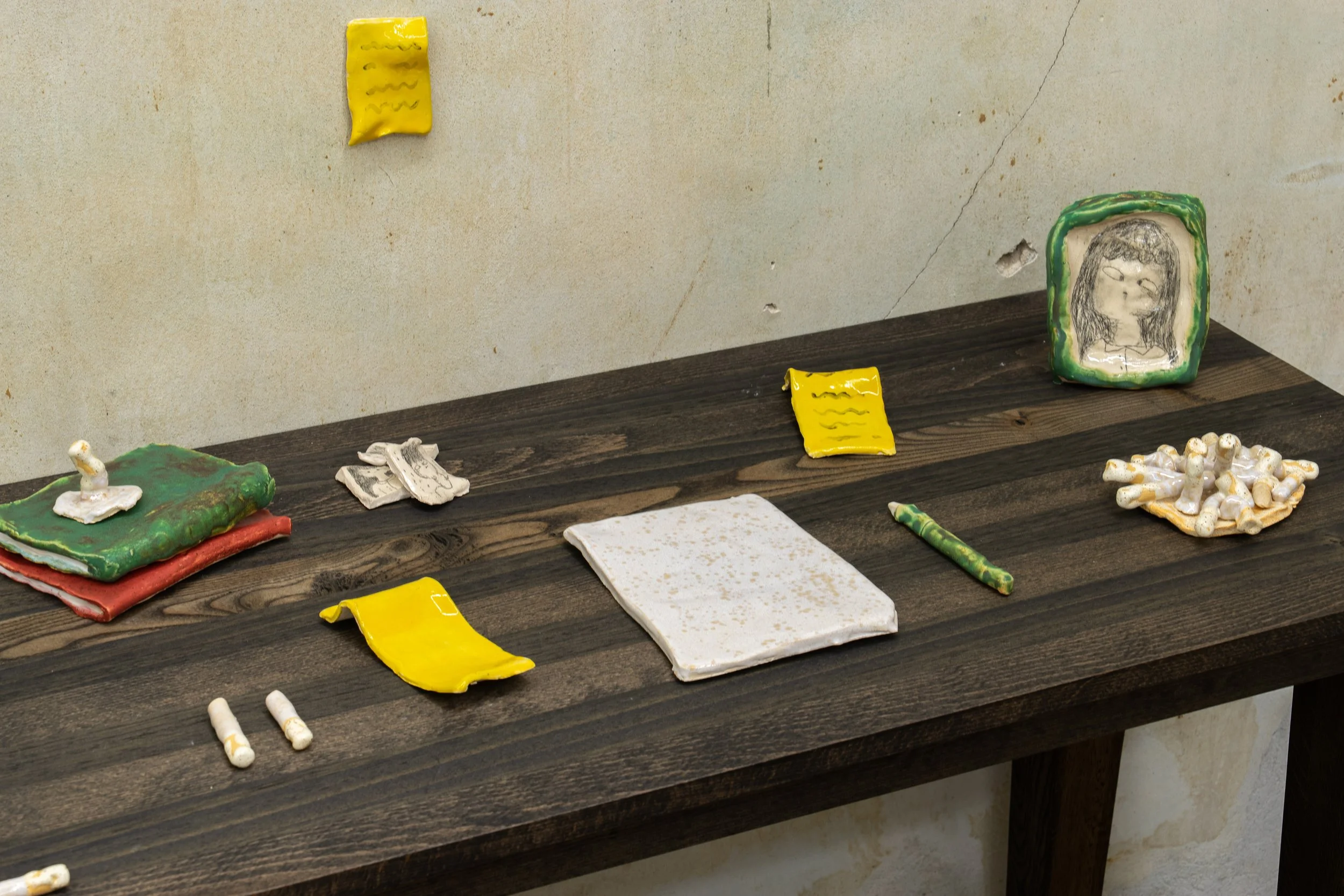
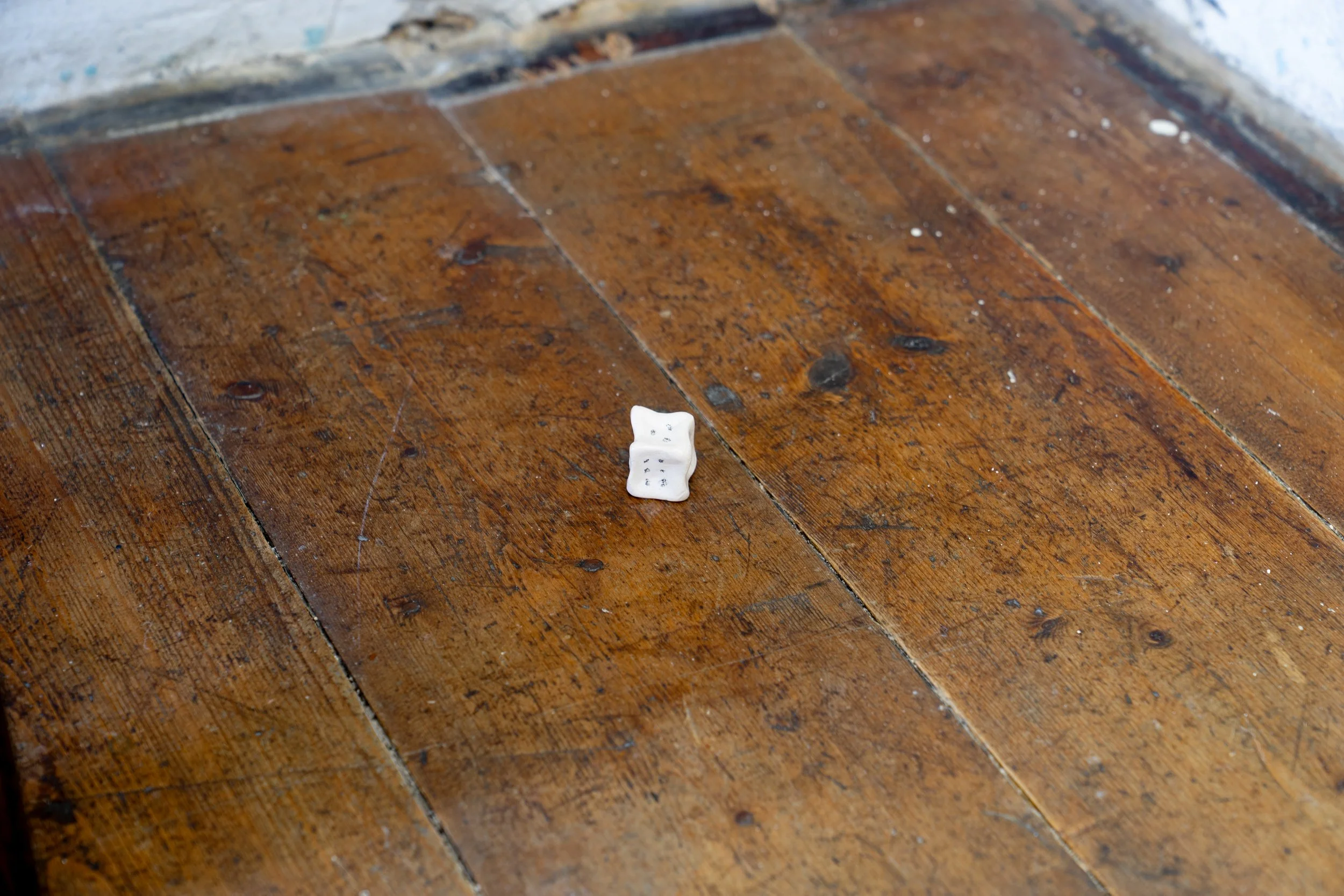
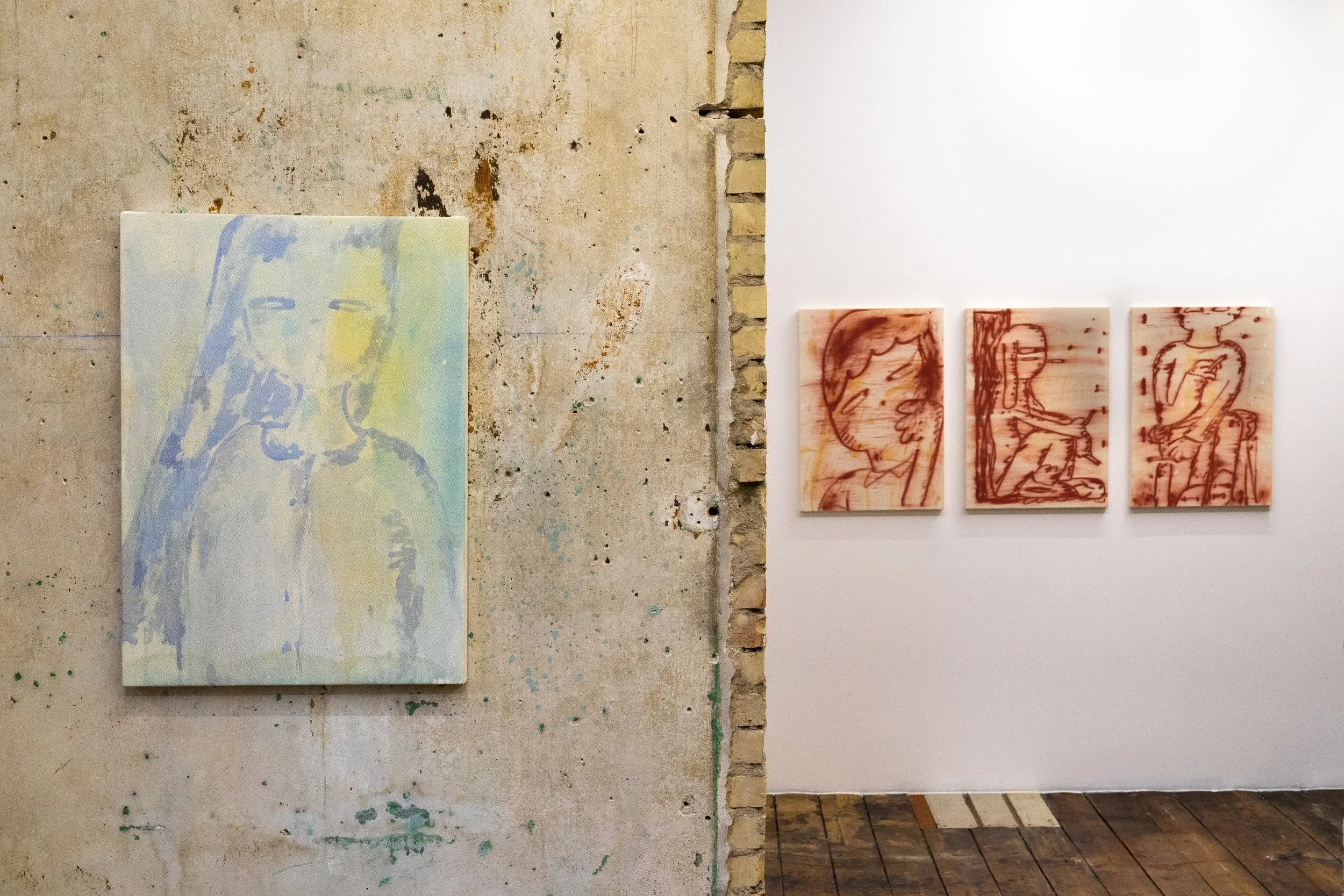
Cigarette-stub piles of accumulated time cast in porcelain, a pen that cannot write, and unresponsive paper resisting inscription. Each object expresses the visceral antagonism to the provocation posed by the contrasting portraits. Books that cannot be opened suspend not only outward communication but reception itself. No decisions, but a question of whether movement beyond the closed-circuit subjectivity is possible.
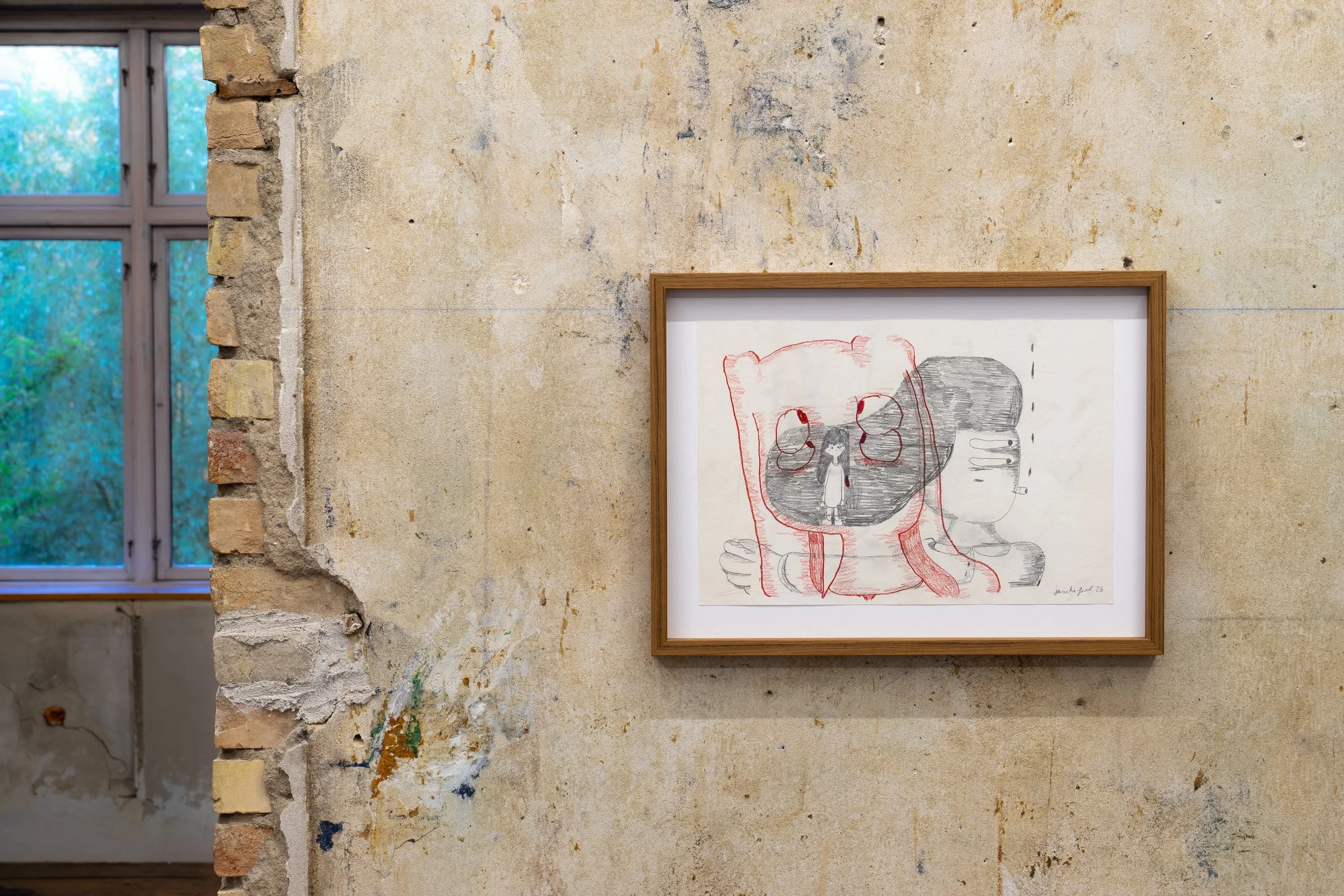
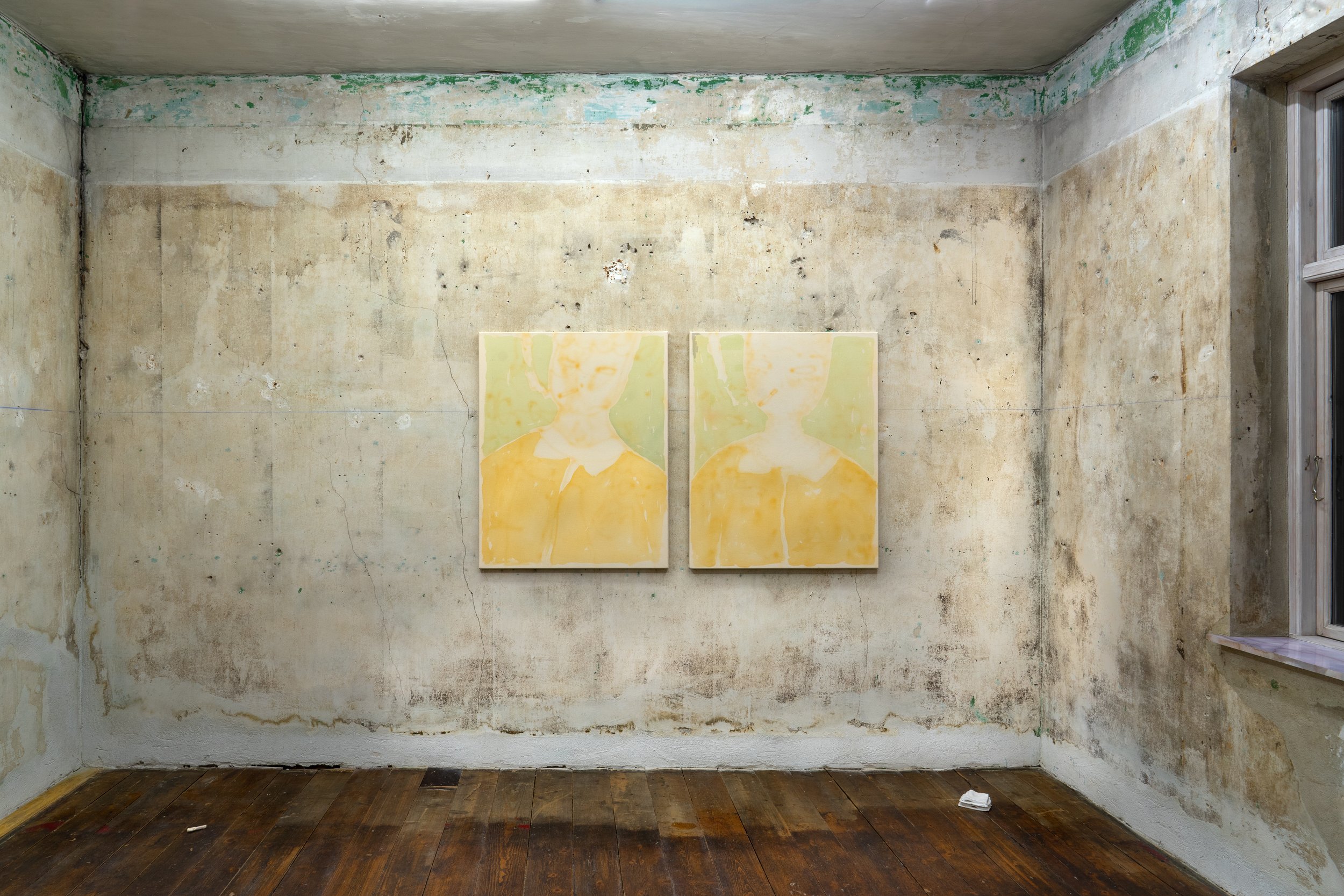
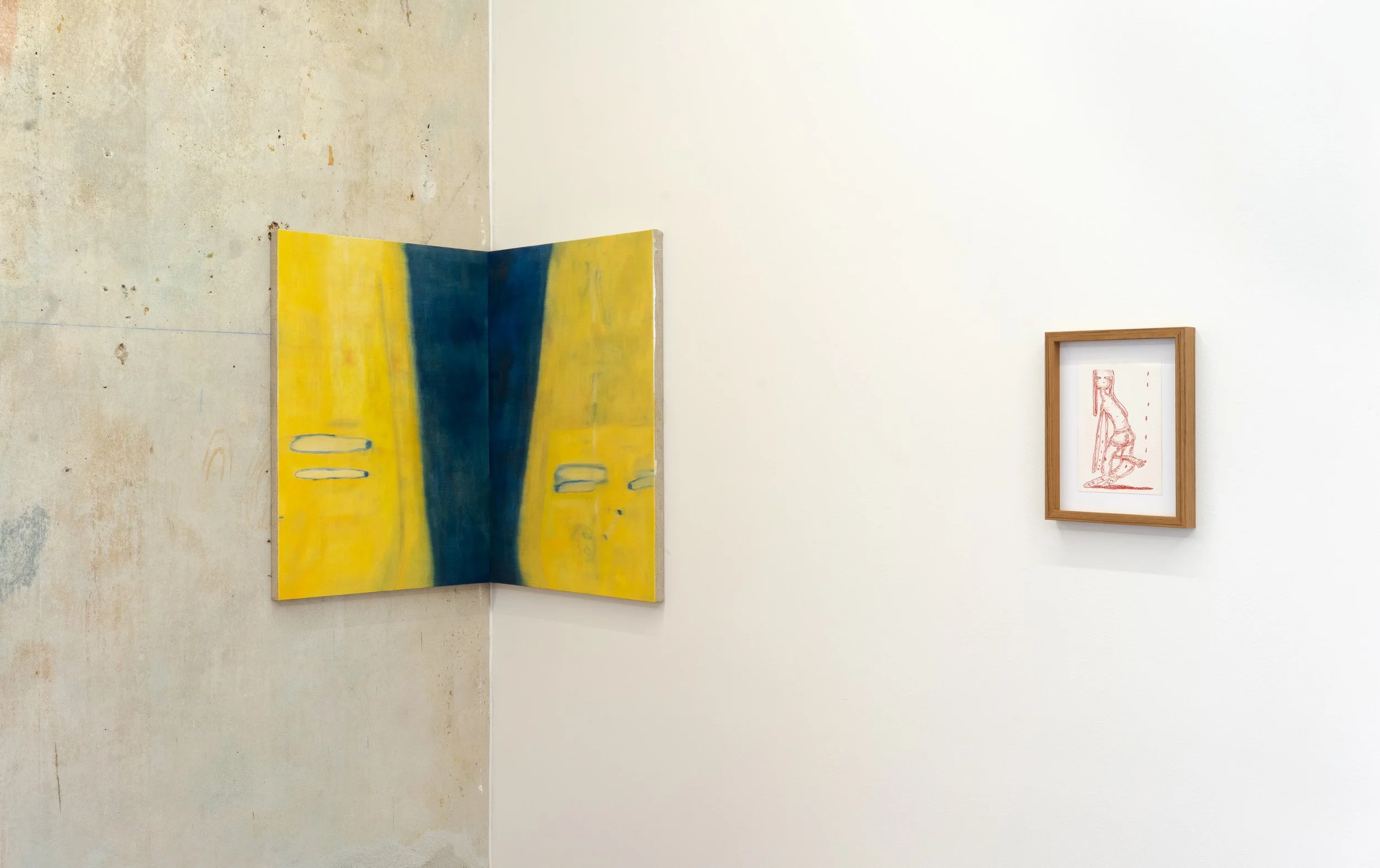
The impersonal yet highly specific signification of passport photographs unfolds through the exhibition’s recurring figures that neither fully arrive nor entirely disappear. They are not portraits so much as traces of the other becoming the self; images that persist after details have faded, lingering between memory and dissolution. The Shanghai drawings mark a rare external move, returning without absolvation, just further observations and fragments of existence.
The exhibition inhabits a space between silence and exchange, where thoughts, images, and emotions accumulate without crossing into transmission toward a specific other. Instead, it speaks of a withdrawal from the other into the public, dissolving the self-conscious demand for inaction. What remains is the prospect, and perhaps the right, to remain still.
by Kata Benedek